

ZAMBIAN BALLERINA
JARED MADERE

JARED MADERE is an artist and co-founder of Galerie Yeche Lange, an onchain and New York-based gallery for digital art, and vvv.so,a minting platform for new art on the Solana ecosystem.
In this essay, he writes about lizard burgers and latent space, and why the common critique of AI as purely derivative misses what’s most interesting about the technology — its capacity to fold latent space in ways that collapse distance between things that have never connected before.
If you want to know what the inverse of something is that is not easy. The opposite of right might not be left if what is on the left resembles what is on the right. One of the more popular critiques of working with AI stems from the idea that the tech is innately regurgitative and only really spits out variations of its training data reshuffled in different combinations. I’m not sure where that idea comes from. So many people use ChatGPT like a search engine that surfaces information from its depths, which could push one to believe that its imagination is somewhat finite. But I’ve heard many people suggest this same limitation years before LLMs became household tech.
The gift we’ve given ourselves through AI is the opposite. Some would argue many of these systems are nothing more than very elaborate chains for predicting the next string of letters after an input. Even if all they are currently capable of is completing a thought, the same gravity that pulls them toward the logical conclusion of whatever path they are pointed down can also be used to burrow tunnels between points that have never been linked.
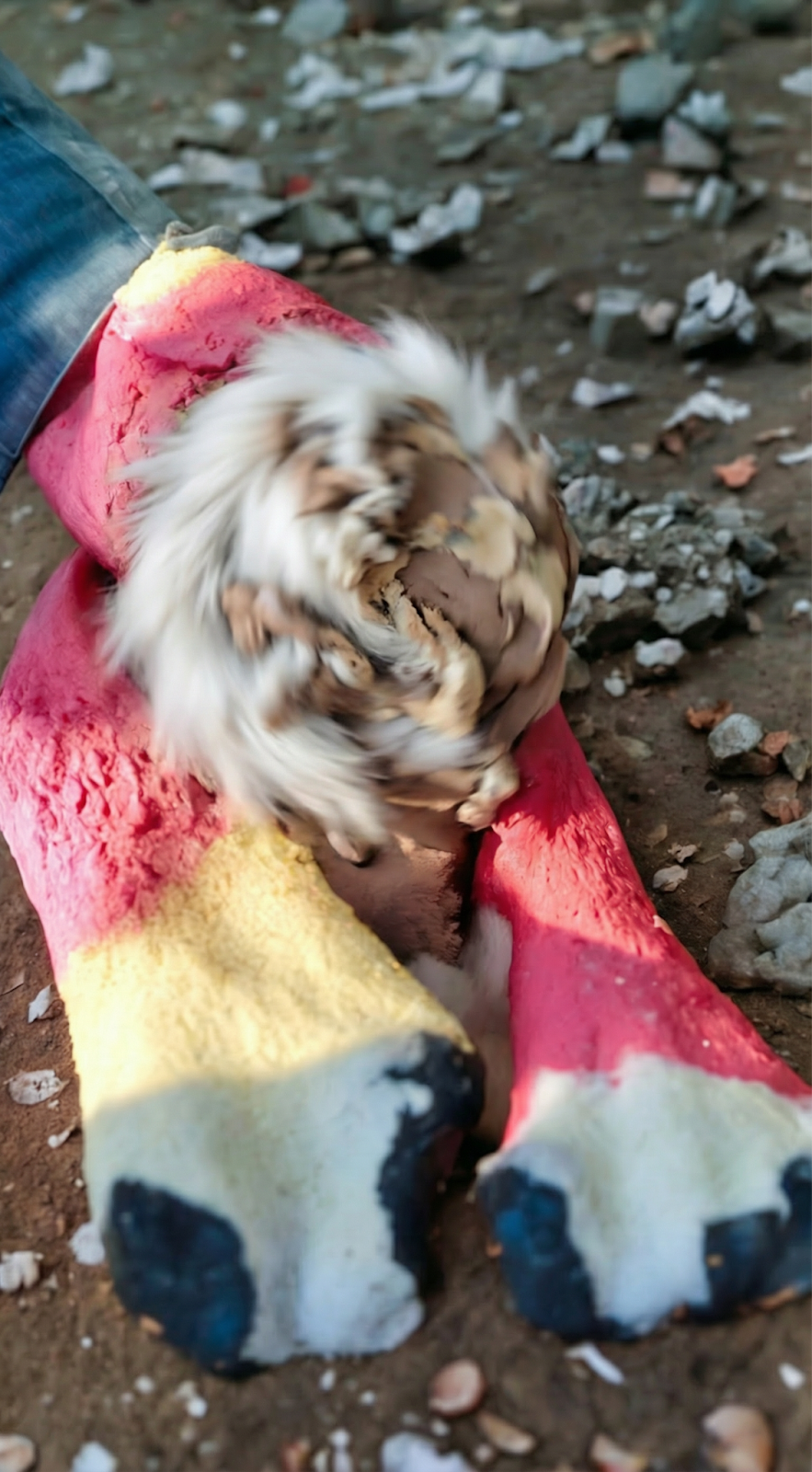
This capacity is ultimately what will give humanity so many medical and technological advances — from cures to fusion to efficient desalinization of oceans. While you are asleep, these technologies are able to spawn oceans of themselves working in tandem to investigate every possible connection between combinations of matter and thought. Humans may never have thought to test if a peanut protein exposed to sulfur-rich salt water and compressed under enormous pressure could yield a compound capable of fueling a continent for a year or neutralizing tumors from a deposit the size of a grain of sand. Or if they did have this idea, they may not have been able to secure the funding to conduct the research. AI is capable of dedicating many iterations of itself to thinking through every possible combination of everything. Factor in its ability to draw conclusions based on an understanding of thousands of human languages, in addition to machine languages, and its capacity for thinking through the floor of one mode of describing the world to the ceiling of another is enormous.
It targets the space between two or more points and weaves a path through them in such a way that, when tightened, they collapse together.
Translation offers a simple example of how this works. But as these models swell, the implications become increasingly thrilling, exceeding what even the most elastic minds could contemplate. The way that longing is expressed in the body language of a dolphin, the way duty to one’s family is articulated in Senegalese, the side-chain compression of a kick drum, the anxiety and sense of purpose in delivering an eviction notice, blue wet bleached fur-scent — all of these concepts and sensations are categorized in specific boxes within the human mind. But within the understanding of a multi-modal, language-agnostic system, there is no reason why they must remain so separate or artificially categorized. Much like folding space to arrive at two points instantaneously, the organization of latent space is decimating concepts of distance and hierarchy.
We’ve grown accustomed to seeing images synthesized, with the assistance of AI, that attempt to pinpoint a cluster of very known points in latent space. AI can be very useful in rendering conventional images in well-trodden aesthetic styles, but this same technology can be exploited to reach destinations that are much less known. Show me a Zambian ballerina in a ruby slipper ascending a crystal staircase to a pink castle in the clouds, kissing a prince that looks like a Ken doll of an aquatic G-d in the style of CoCoa. Show me Chun-Li twerking on the grave of a loathed politician. Show me a grandmother weeping in the slums as an Emirati passes in a gold Mazi vomiting diamonds.
When you intersect two things, there are so many ways to arrive at their potential combination. A gecko and a stone. Slice both into cubes and make a checkerboard of stone and lizard skin. Put both in a concrete mixer and spread as a paste. Put the head on one side of the stone and the tail on the other so it resembles a lizard burger between a rock bun. Decimate the molecular structure of both to their most irreducible state and reorganize them until the same matter is now a glass of water or an LED curtain.
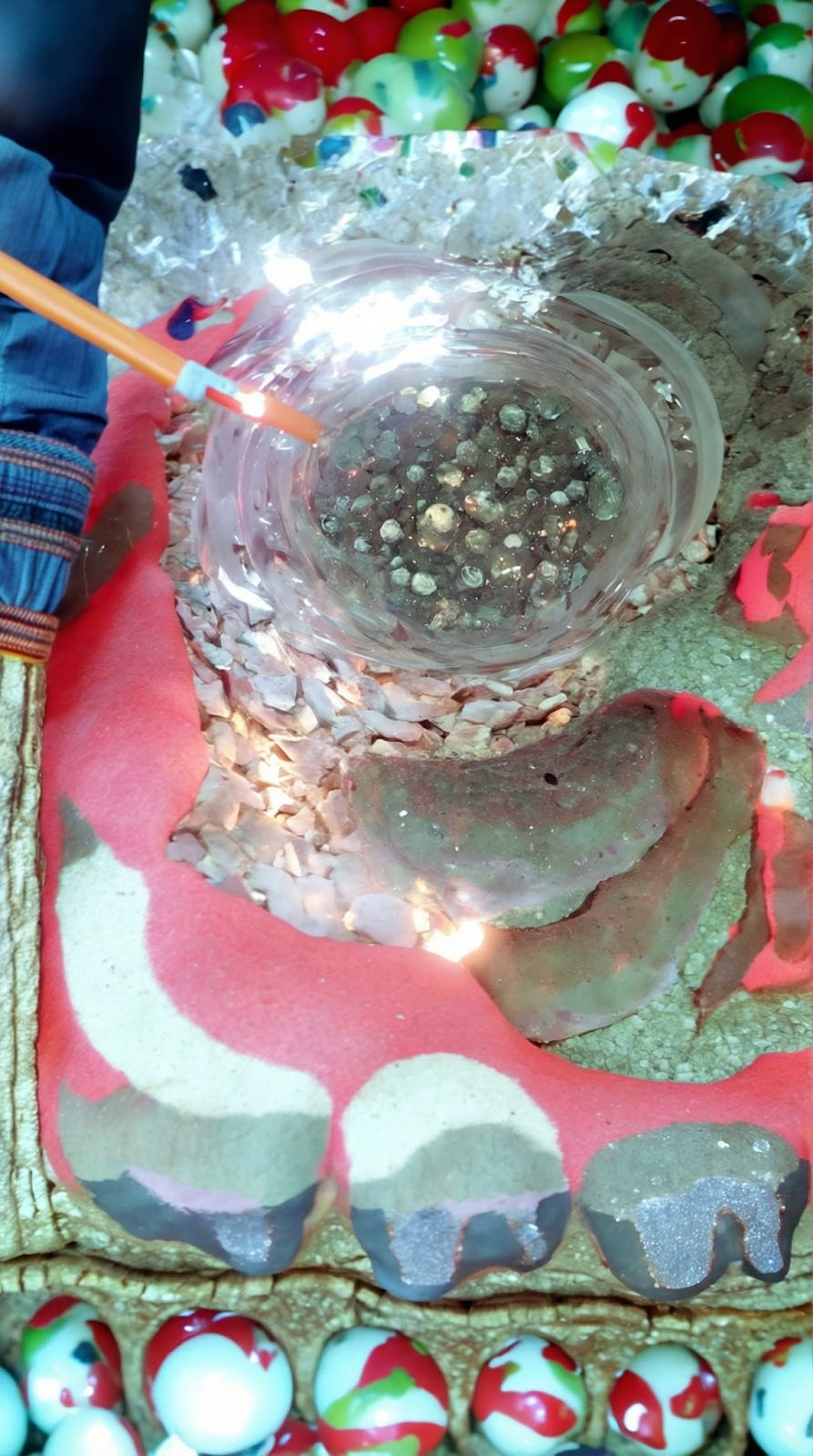
There are so many ways to interpret the axis along which the hybridization occurs — and why should all the components even be synthesized along the same axis?
My favorite way of working with AI for media synthesis involves this sort of navigation of concepts and forms: projecting the depth of information of the inner terrain of an organ onto the concept of a tunnel within a shattered plate filled with bats, expressed through the medium of pebbles, candles, frozen jam, and charred blankets. Subtracting the impact craters of lead slugs hitting marmalade from an index of half-finished haircuts abandoned during earthquakes, bludgeoned with speckles of shimmering rose and cornflower retrieved from reflections on a sticky menu in a Malagasy cafe at the edge of a graduation photo — all in service of defining the complex texture of the dent in a mother’s forehead after having a shelf of books topple on her while trying to reach the top row.
It is my hope that it is not forgotten that AI can be used this way. Jaron Lanier said that his vision for VR was always that it would be used for massively collaborative worldbuilding, where each individual defines all of the sensory parameters and boundaries for any given point in the system where they are exercising their will. The public image of VR for decades has instead focused on first person shooters or bouldering games, where the user throws on goggles and pretends to be in a low poly world with approximations of gravity based on our own.
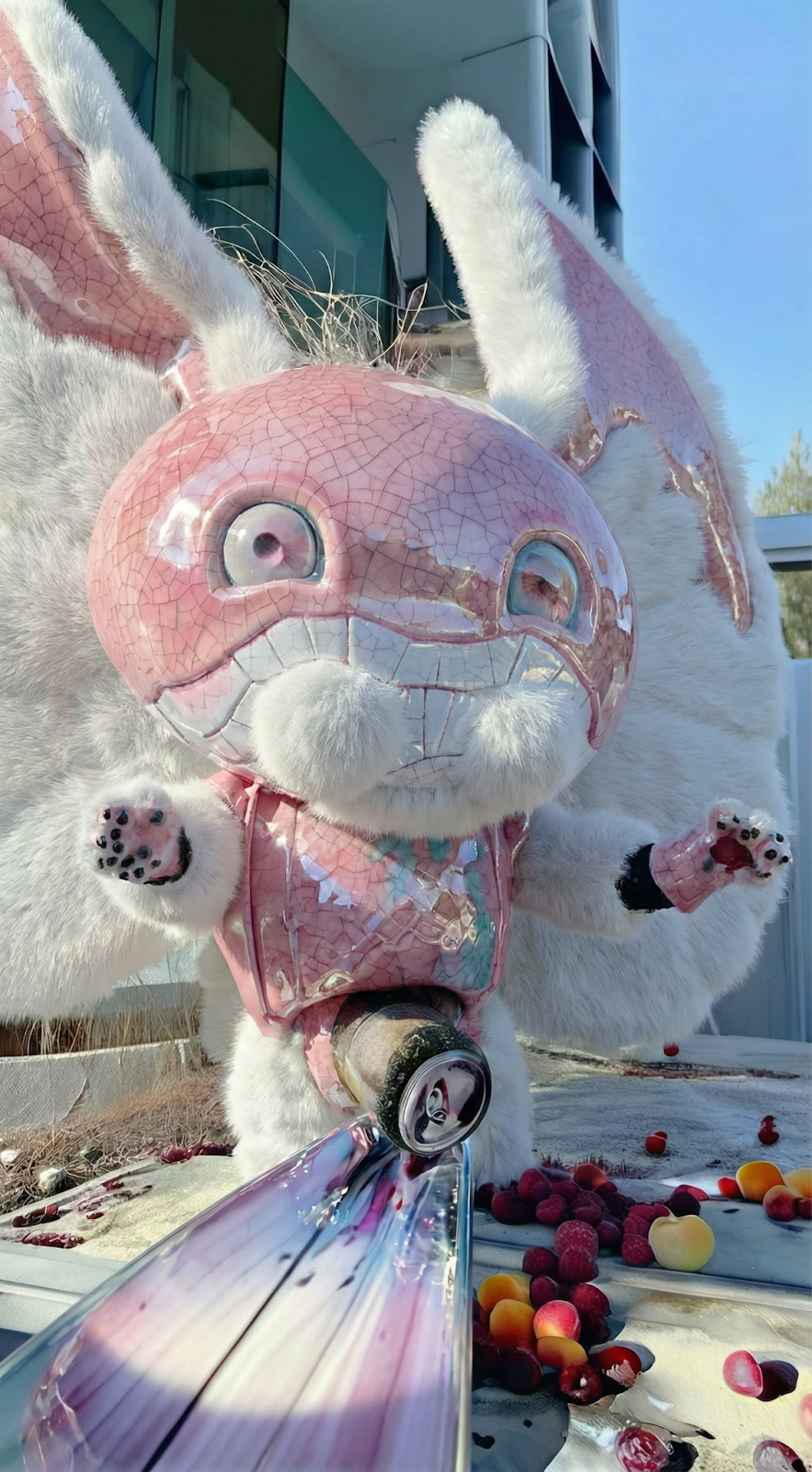
It is a great joy to be able to create more images than were ever created on Earth prior to 2020 — images of princesses that every child can see themselves in, or juggy monsters tea-bagging depopularized celebrities recently outed for being perverts or throwing phones at their assistants. It is a great joy to see things that are difficult to put into words.